Written by: Editorial Research Team (Research & Fact-Checking Desk)
Reviewed by: Editorial Review Panel (Source Verification Desk)
Editorial Standard: Fact-Checked Reference Guide | Primary Source Verified — Cross-checked against primary documentation, public filings & published industry standards
Editorial Verification Standard: Technical parameters, comparative benchmarks, and procedural steps are cross-checked against primary documentation and published standards.
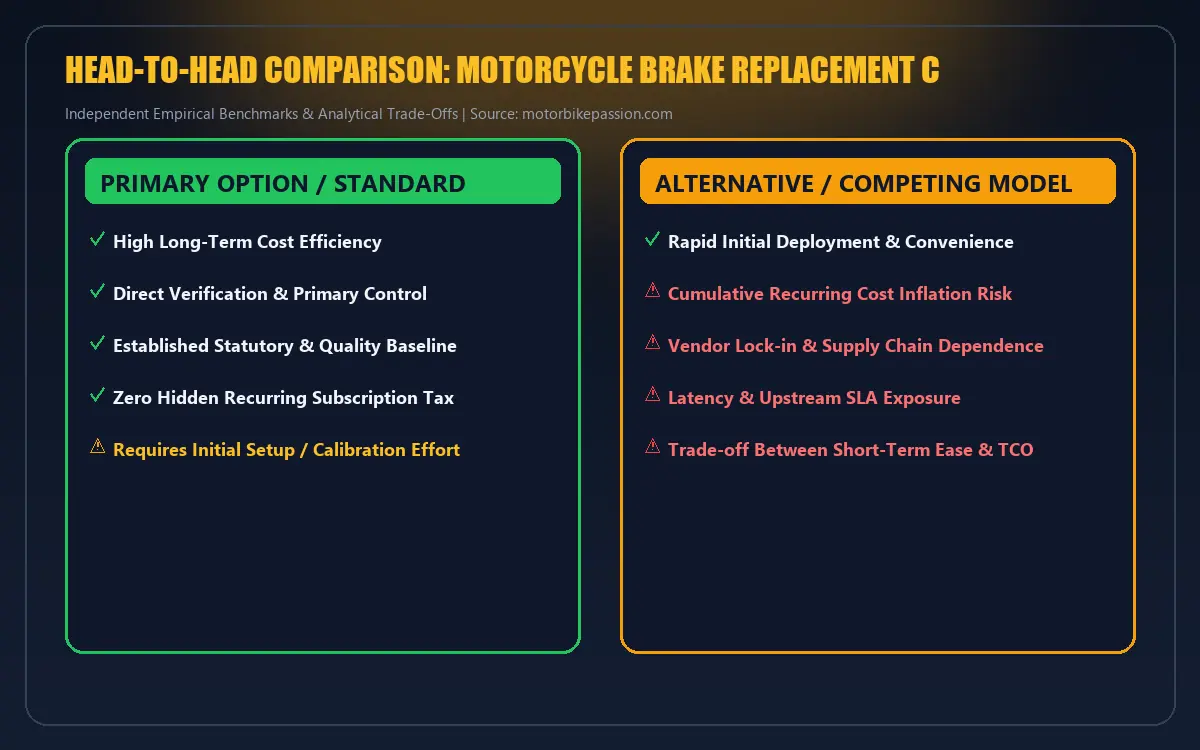
Motorcycle brake replacement cost depends on brake layout, parts, labor access, inspection findings, ABS architecture, and shop rate. No public national dataset standardizes motorcycle brake invoices by model, region, repair scope, and shop type.
Use figures below for planning only. Obtain written, itemized quotes.
Calculation method
Subtotal before tax =
parts
+ (labor hours × hourly rate)
+ consumables
+ diagnostic charges
+ shop fees
Planning assumptions:
- Independent-shop labor: $100–$150 per hour
- Dealer labor: $150–$220 per hour
- Street motorcycles with standard access
- One front or rear axle unless stated
- No severe corrosion, seized fasteners, damaged threads, or emergency transport
- Sales tax, transport, and emergency fees excluded
- Parts prices vary by OEM or aftermarket selection and exact fitment
These figures are editorial calculations. They do not represent verified national prices.
Cost table
| Repair scope | Parts assumption | Labor assumption | Other charges | Calculated subtotal before tax |
|---|---|---|---|---|
| One pad set, one axle | $50–$220 | 0.5–1.5 hours at $100–$220 | $0–$40 consumables | $100–$590 |
| Pads plus fluid flush | $80–$280 | 1–2.5 hours at $100–$220 | $20–$80 fluid and consumables | $200–$910 |
| One rotor plus pad set | $180–$700 | 1.5–3 hours at $100–$220 | $20–$60 consumables | $350–$1,420 |
| Two front rotors plus pad sets | $400–$1,400 | 2–4 hours at $100–$220 | $30–$80 consumables | $630–$2,360 |
| Caliper rebuild, one caliper | $60–$300 | 2–5 hours at $100–$220 | $20–$60 fluid and consumables | $280–$1,460 |
| Brake-line replacement | $100–$450 | 1.5–4 hours at $100–$220 | $20–$80 fluid and consumables | $270–$1,410 |
| ABS diagnosis only | $0–$50 inspection materials | 0.5–3 hours at $100–$220 | $0–$150 scan or diagnostic fee | $50–$860 |
Formula examples
Lowest one-pad-set estimate:
$50 parts
+ (0.5 × $100 labor)
+ $0 consumables
+ $0 diagnostic fee
= $100
Highest one-pad-set estimate:
$220 parts
+ (1.5 × $220 labor)
+ $40 consumables
+ $0 diagnostic fee
= $590
Lowest pads-plus-fluid estimate:
$80 parts
+ (1 × $100 labor)
+ $20 fluid and consumables
= $200
Highest pads-plus-fluid estimate:
$280 parts
+ (2.5 × $220 labor)
+ $80 fluid and consumables
+ $0 diagnostic fee
= $910
A shop may charge a separate inspection, scan-tool, disposal, environmental, or minimum-labor fee. Ask whether that fee remains payable if no repair follows.
Complete axle service: defined scenarios
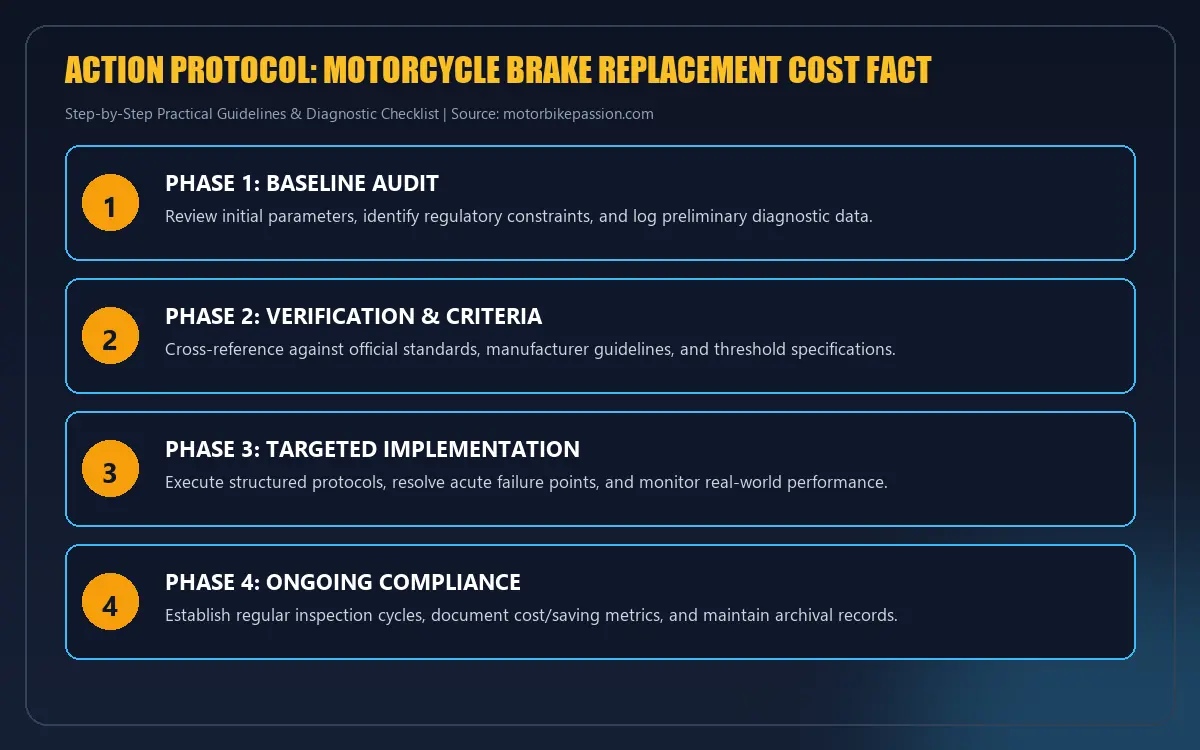
“Complete axle service” has no fixed meaning. Quote each scenario separately.
| Scenario | Included work | Illustrative subtotal before tax |
|---|---|---|
| Pads only | Pad set, inspection, installation, basic function check | $100–$590 |
| Pads plus fluid | Pads, fluid replacement, bleeding, function check | $200–$910 |
| Pads plus one rotor | Pad set, one rotor, installation, inspection | $350–$1,420 |
| Pads plus two front rotors | Two rotor sets, two pad sets, installation, inspection | $630–$2,360 |
| Caliper rebuild | Disassembly, cleaning, seals, reassembly, bleeding | $280–$1,460 |
| Hydraulic service | Fluid replacement, bleeding, hose or fitting work where required | $200–$1,410, depending on parts |
| ABS fault diagnosis | Inspection, code retrieval, sensor and tone-ring checks, testing | $50–$860 |
These ranges overlap because “one axle” can mean one rear disc, two front discs, one caliper, two calipers, conventional hydraulics, linked braking, or ABS-controlled circuits.
What one axle means
- Pad set: Every pad serving one brake circuit or axle. Dual front calipers may require two pad pairs.
- One rotor: One disc serving one caliper or one side of a dual-disc system.
- Fluid flush: Removal and replacement of fluid through specified circuits.
- Diagnosis: Fault-code retrieval, inspection, measurement, and testing before parts replacement.
- Caliper rebuild: Disassembly, cleaning, seal replacement, reassembly, bleeding, and function check.
- Axle service: A defined group of operations. The quote must list parts, labor, fluid, bleeding, diagnostic work, and inspection limits.
“Front brake service” alone does not define enough work for reliable comparison.
Parts and brake layout
Front systems often use two rotors and two calipers. Dual-disc service can increase parts cost substantially, though labor may not double.
Touring, adventure, and performance motorcycles may add:
- Larger rotors
- Radial calipers
- Linked braking
- Integral ABS
- Multiple hydraulic circuits
- Model-specific bleeding procedures
- Restricted wheel or exhaust access
Brembo’s motorcycle brake component information distinguishes application, compound, disc construction, caliper design, and fitment. “Aftermarket” therefore describes source, not uniform quality or price.
Check:
- Pad shape and backing-plate dimensions
- Friction compound
- Rotor diameter, thickness, offset, and bolt pattern
- Caliper design
- ABS tone-ring clearance
- Fluid specification
- Road-use suitability
- Warranty and fitment documentation
Do not select parts by diameter or pad shape alone.
Labor and diagnostic charges
Labor rises with:
- Wheel or exhaust removal
- Corroded fasteners
- Seized pad pins
- Damaged threads
- Custom hose routing
- Multiple hydraulic circuits
- ABS bleeding
- Linked-brake procedures
- Post-repair fault-code checks
Separate these invoice lines:
| Charge type | What it covers |
|---|---|
| Diagnostic labor | Inspection, measurements, testing, fault tracing |
| Scan-tool fee | ABS or electronic-system code retrieval and activation |
| Replacement parts | Pads, rotors, hoses, seals, sensors, hardware |
| Consumables | Fluid, cleaner, lubricant, shop materials |
| Shop fees | Disposal, environmental, minimum-labor, or facility charges |
| Labor | Removal, installation, bleeding, adjustment, testing |
Dealer labor may cost more while providing model-specific tools and procedures. Independent shops may cost less, but equipment and model familiarity differ.
ABS and linked braking
ABS service may require:
- Fault-code retrieval
- Sensor and tone-ring inspection
- Scan-tool pump activation
- Manufacturer-specified bleeding order
- Pump cycling
- Fault-code clearing
- Post-service self-check
Conventional lever bleeding may leave air inside an ABS modulator. The motorcycle’s service manual controls procedure.
An ABS warning light, persistent soft lever, hydraulic leak, or uncertain bleeding result requires diagnosis before riding.
Inspection findings that change price
A pad-only quote can expand when inspection finds:
- Rotor below manufacturer minimum thickness
- Excessive rotor runout or thickness variation
- Seized caliper piston
- Uneven pad wear
- Swollen or damaged hose
- Leaking banjo, caliper, reservoir, or master cylinder
- Contaminated friction material
- Wheel-bearing play
- Damaged ABS sensor or tone ring
- Severe corrosion
- Damaged mounting threads
Measure rotors at multiple points with suitable tools. Visual inspection cannot establish thickness or runout compliance.
Measure friction material, not backing plate thickness. Check both pads in each caliper.
Use only manufacturer-specified fluid. DOT 3, DOT 4, and DOT 5.1 are generally glycol-ether fluids. DOT 5 is silicone-based and is not interchangeable with them unless manufacturer documentation explicitly permits it.
Safety and standards
FMVSS No. 122 motorcycle braking requirements establish manufacturer performance requirements for covered motorcycle brake systems. The standard includes specified service-brake tests and deceleration requirements. It does not set consumer repair prices, universal pad limits, rotor limits, torque values, or replacement intervals.
UNECE Regulation No. 78 motorcycle braking approval requirements covers approval testing for vehicle categories L1–L5, including service brakes, secondary brakes, parking brakes, and test conditions. It helps explain why brake architecture affects components and service procedures. Manufacturer service information controls repair decisions.
NHTSA motorcycle crash-risk data reports 6,084 motorcyclists killed in traffic crashes in 2022. The report’s 2021 comparison is 5,932 fatalities. These figures provide safety context, not proof that any particular part requires replacement.
Federal motorcycle emissions-certification rules, including 40 CFR § 86.448-12, do not establish brake prices or brake replacement intervals. They matter only when a motorcycle’s integrated electronic systems or manufacturer-specific diagnostic procedures add service complexity. They are not used in calculations below.
Symptoms and decisions
| Symptom | Possible causes | Decision |
|---|---|---|
| Spongy lever or pedal | Air, leak, hose expansion, boiling fluid, ABS air pocket | Find leak and bleeding requirement before replacing pads |
| Lever reaches grip | Hydraulic fault, worn pads, master-cylinder problem | Do not ride; inspect immediately |
| Uneven pad wear | Seized piston, blocked slider, misalignment | Inspect caliper before ordering parts |
| Pulsing lever | Runout, thickness variation, deposits, bearing or hub problem | Measure rotor and wheel components |
| Brake drag | Piston seizure, blocked return port, swollen hose, incorrect fitment | Test hydraulic release and caliper movement |
| Squeal | Compound, contamination, glazing, loose hardware | Noise alone does not prove rotor failure |
| Blue or cracked rotor | Excess heat, severe drag, thermal damage | Measure and inspect before reuse |
| Fluid loss | Hose, banjo, caliper, reservoir, or master-cylinder leak | Stop riding; repair leak and replace contaminated parts |
| ABS warning | Sensor, tone ring, wiring, voltage, stored code, modulator | Retrieve fault data before replacing module |
Wheel bearings, tires, fork alignment, steering-head bearings, and suspension faults can imitate brake vibration or instability.
How to compare quotes
Request:
- Year, make, model, market, and brake configuration
- Front or rear axle
- Number of calipers, pads, and rotors
- Part numbers and OEM or aftermarket status
- Rotor thickness and runout measurements
- Labor hours and hourly rate
- Fluid type and quantity
- Diagnostic or scan-tool charges
- Consumables and shop fees
- Tax and transport treatment
- Warranty terms
- Post-service inspection and road-test scope
Ask shops to separate confirmed work from possible additional work.
Worked estimate
Example: one front pad set and fluid service.
Pad set:                         $160
Fluid and consumables:            $30
Labor: 1.5 × $120:              $180
Diagnostic or ABS fee:            $40
Subtotal before tax:            $410
Sales tax:                       Local rate
If inspection finds a rotor below its manufacturer limit:
Rotor:                           $280
Additional labor: 0.8 × $120:    $96
Revised subtotal:               $786
Sales tax:                       Local rate
Calculation:
$410 + $280 + $96 = $786
This is an editorial calculation, not a market quote.